
No Bounds Digital is celebrating 10 years as a HubSpot agency partner. That milestone gives us a natural moment to pause, look back, and appreciate how much has changed—not only for our agency, but for HubSpot, its customers, and the broader world of sales, marketing, service, and operations technology.
Ten years ago, HubSpot was already a meaningful force in inbound marketing. For many companies, it was the platform that helped them move away from interruptive marketing and toward helpful content, lead nurturing, landing pages, forms, email, and analytics. The idea was straightforward but powerful: attract people by being useful, convert them through smart digital experiences, and nurture them with relevant communication.
At the time, that alone was a major shift. Many businesses were still stitching together disconnected tools for websites, email marketing, contact management, sales follow-up, and reporting. Marketing teams often owned one set of systems, sales teams owned another, and customer service lived somewhere else entirely. Data was scattered. Processes were manual. Reporting was slow. For growing companies, the promise of HubSpot was not just software; it was a more organized way to grow.
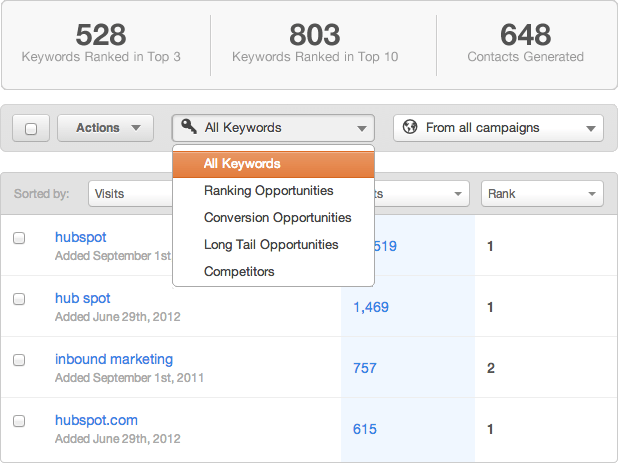
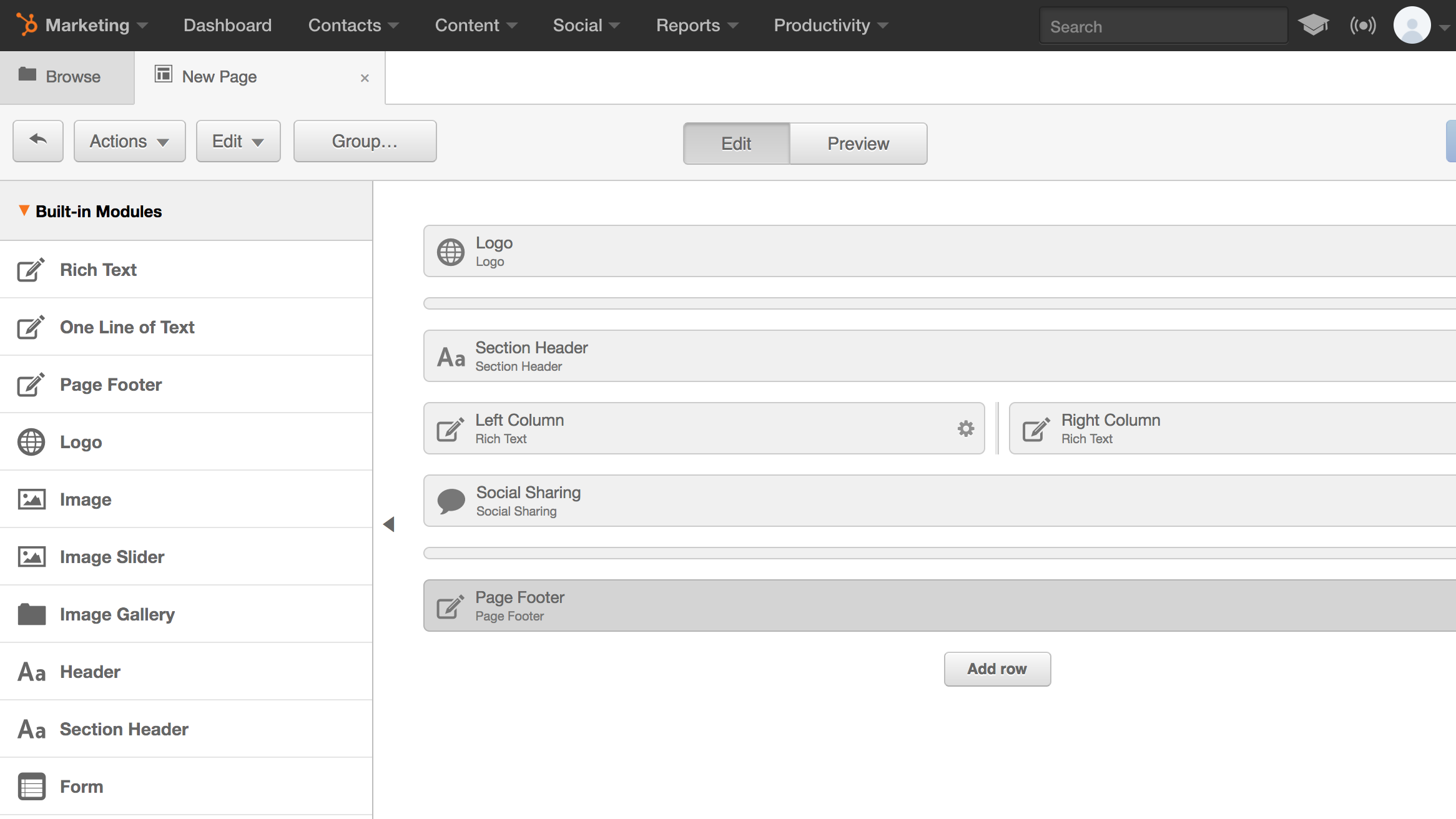
Over the last decade, that promise has expanded dramatically. But first, take a walk down memory lane with me with these screenshots.
From Inbound Marketing Software to Customer Platform
One of the clearest changes over the past 10 years has been HubSpot’s evolution from a marketing-focused platform into a broader customer platform. The early perception of HubSpot was often tied closely to blogs, landing pages, email workflows, lead scoring, and inbound methodology. Those tools are still important, but they now sit inside a much larger ecosystem.
HubSpot’s CRM became the foundation for that evolution. Once the CRM became central, HubSpot was no longer only about generating leads. It became about managing the full customer lifecycle. Contacts, companies, deals, tickets, campaigns, website activity, conversations, tasks, notes, and automation could all begin to live in one connected system.
That changed the way companies thought about HubSpot. It was no longer just a marketing department tool. It became a place where marketing, sales, service, and operations teams could work from the same source of truth. That may sound obvious now, but it was a significant shift. A decade ago, many businesses accepted disconnected systems as normal. Today, disconnected systems are increasingly seen as a barrier to growth.
The Rise of the Hubs
Another major part of HubSpot’s product development has been the expansion of its hub-based structure. Marketing Hub remained core, but Sales Hub, Service Hub, CMS Hub, Operations Hub, Commerce Hub, Content Hub, and Data Hub each reflected a broader vision: every customer-facing team needs tools that are connected to the same underlying CRM.
Sales Hub helped turn HubSpot into a more serious platform for sales teams. Features like pipelines, sequences, meetings, templates, playbooks, forecasting, deal automation, and reporting gave sales organizations a way to manage activity and pipeline without leaving the CRM. For many companies, this meant HubSpot could replace older or more cumbersome sales tools while giving leadership better visibility into revenue operations.
Service Hub expanded the platform further by bringing support, tickets, knowledge bases, feedback, and customer success activity into the same environment. That mattered because the customer journey does not end when a deal closes. The handoff from sales to service, the quality of onboarding, the responsiveness of support, and the ability to retain and expand customers all depend on shared context.
CMS Hub, later evolving into Content Hub, represented another important development. HubSpot was no longer only helping companies drive traffic to websites; it was increasingly helping them build and manage the website experience itself. Over time, the CMS became more flexible, more developer-friendly, and more connected to CRM data. That opened the door for personalized website experiences, smarter content operations, and tighter alignment between web strategy and revenue strategy.
Operations Hub was especially meaningful for teams that needed cleaner data, better integrations, and more advanced automation. As HubSpot portals became more complex, the need for data quality, process consistency, and system governance became more important. What began as a CRM and marketing platform increasingly needed to support real operational infrastructure. The evolution toward Data Hub reflects just how central data has become to modern growth.
HubSpot Became More Powerful—and More Complex
As HubSpot grew, so did the sophistication of its customers. Ten years ago, many HubSpot implementations focused on core marketing setup: forms, landing pages, lists, emails, workflows, and basic CRM organization. Today, HubSpot projects often involve complex data architecture, custom objects, programmable automation, custom integrations, revenue reporting, multi-team permission structures, lifecycle governance, attribution strategy, sales process design, customer success workflows, and website development.
That evolution has been exciting, but it has also changed what companies need from an agency partner. A decade ago, a HubSpot partner could often succeed by being strong in inbound marketing strategy and basic technical setup. Today, many customers need a blend of strategy, implementation, CRM architecture, integration expertise, change management, training, and long-term system administration.
That shift has shaped No Bounds Digital as well. As HubSpot became more capable, our work naturally moved deeper into implementation, technical problem-solving, CRM customization, and operational support. The question became less, “How do we use HubSpot?” and more, “How do we make HubSpot fit the way this business actually grows?”
The Marketplace and Ecosystem Matured
Another major change has been the growth of the HubSpot ecosystem. Ten years ago, HubSpot integrations existed, but the ecosystem was not what it is today. Now, companies can connect HubSpot with a wide range of tools across accounting, events, ecommerce, calling, data enrichment, reporting, project management, customer support, and industry-specific platforms.
This ecosystem growth has been one of HubSpot’s biggest strengths. No single platform can do everything for every business. But a strong central CRM, combined with a healthy integration ecosystem, gives companies the ability to create a connected technology stack without forcing every team into rigid workflows.
At the same time, the growth of the ecosystem has raised the bar for implementation. More integrations mean more decisions. More connected systems mean more opportunities for data conflicts, sync issues, lifecycle confusion, duplicate records, and reporting gaps. The platform has become more powerful, but that power needs thoughtful configuration.
AI Enters the Customer Platform Era
The most recent chapter in HubSpot’s evolution is the rise of artificial intelligence across the platform. AI is changing expectations for how marketing, sales, service, and operations teams work. Instead of simply storing data and triggering workflows, modern platforms are increasingly expected to assist, recommend, summarize, enrich, draft, analyze, and automate more intelligently.
HubSpot’s AI direction, including Breeze and AI-powered agents, reflects this broader shift. The platform is moving toward a future where teams can use AI to create content, prioritize prospects, answer customer questions, summarize records, improve data quality, and accelerate routine work. For companies that already have clean data and well-designed processes, AI can become a force multiplier. For companies with messy data and unclear processes, AI also makes the need for strong CRM foundations more obvious.
That is one of the important lessons of the last decade: technology keeps advancing, but fundamentals still matter. Clean data matters. Clear lifecycle stages matter. Well-designed pipelines matter. Good handoffs matter. Useful reporting matters. Training matters. AI does not eliminate the need for sound systems; it increases the value of having them.
The Company Behind the Product Also Changed
HubSpot’s company evolution has been just as notable as its product evolution. Over the past decade, HubSpot grew from a company strongly associated with inbound marketing into a global public software company serving scaling businesses across many industries. Its messaging expanded from inbound to customer experience, then to connected customer platform, and now increasingly to AI-powered growth.
Along the way, HubSpot had to balance simplicity with power. That is not an easy balance. Small and mid-sized businesses want software that is approachable, but they also need tools that can support real complexity as they grow. HubSpot’s challenge has been to keep the platform easy enough for teams to adopt while making it robust enough for advanced use cases.
That tension has defined much of the product’s development. Every new hub, feature, integration, and AI capability adds value, but also adds new decisions for customers. That is where strategy becomes essential. The best HubSpot portals are not the ones with the most features turned on. They are the ones where the right features support the right processes for the right business goals.
What 10 Years Has Taught Us
After 10 years as a HubSpot agency partner, one theme stands out: the companies that get the most value from HubSpot treat it as a business system, not just a software subscription.
HubSpot can manage marketing campaigns, sales pipelines, service tickets, websites, data operations, reporting, and automation. But the real value comes when those pieces are connected intentionally. A form submission should not just create a contact. It should start a meaningful customer journey. A deal pipeline should not just track revenue. It should reflect a real sales process. A dashboard should not just display numbers. It should help leaders make better decisions.
The last decade has also shown that HubSpot works best when teams continue to improve it over time. Businesses change. Sales processes change. Marketing channels change. Customer expectations change. Reporting needs change. A HubSpot portal should evolve with the company using it.
Looking Ahead
As No Bounds Digital celebrates 10 years as a HubSpot agency partner, we are grateful for the opportunity to have grown alongside the platform and the businesses that use it. The HubSpot of today is far more powerful than the HubSpot of 10 years ago. It is broader, smarter, more connected, and more central to how companies manage growth.
The next decade will likely bring even more change. AI will become more embedded. Data will become more important. Customer expectations will continue to rise. Companies will need systems that help them move faster without losing clarity, personalization, or operational discipline.
That makes this milestone both nostalgic and forward-looking. Ten years ago, HubSpot helped companies rethink marketing. Today, it helps companies rethink the entire customer journey. And as HubSpot continues to evolve, No Bounds Digital is looking forward to helping businesses make the most of what comes next.